
A social lead rarely arrives as a complete record. It starts as a comment, story reply, direct message, ad response, or short question such as “How much?”, “Do you serve my area?”, or “Can I book this week?” The technology stack should turn that signal into a useful next action without forcing the person through a long interrogation.
The cleanest stack has four jobs: preserve the context that created the message, ask only questions that change the route, give the first useful answer quickly, and bring in a person when judgment is needed. Everything else—tags, integrations, dashboards, and AI—should support those jobs.
When comparing a mature social automation product with a more focused business-conversation platform, check the real plan and channel offer instead of relying on an old price table. This ManyChat pricing and workflow guide explains the 2026 plan split, supported-channel questions, messaging windows, and the difference between broad multi-channel automation and a reviewed Messenger Bot workflow.
Start With the Signal That Creates the Lead
Write down the exact event that begins the conversation. It might be an Instagram comment on a service demonstration, a Messenger question from a Facebook Page, a reply to a story, a click from an ad, or an inbound message after someone visits a website. The trigger matters because it carries context and determines which channel rules apply. For a separate look at WhatsApp platform choices and costs, see the WhatsApp business setup and pricing guide. Disclosure: The Cafe Techno and Messenger Bot are under common ownership.
Do not combine every source into a generic “new lead” bucket before answering the first question. A person who commented on a product demo needs a different opening from someone who sent a support message. Keep the source, campaign, content item, and requested action visible long enough to give a relevant response.
Separate a confirmed existing customer from a new prospect before choosing the next action. The existing-customer follow-up and measurement guide explains how to check the prior relationship, respect contact preferences and keep service issues separate from promotion. Count a verified repeat purchase or completed appointment separately from a reply or click; a new lead and a returning customer need different denominators.
Measure signal quality. Count how many conversations begin, how many receive the promised answer, how many reach a qualified next action, and how many require a person. A high comment count can look successful while producing few real bookings or purchases.
Ask Only Questions That Change the Route
Qualification should reduce uncertainty, not collect every detail a sales system could hold. A local service flow may need the service type, general location, and timing. An ecommerce flow may need product category, use case, and budget range. A course inquiry may need experience level and preferred start date.
For each question, define the branch it changes. If every possible answer leads to the same page, remove the question. If the answer changes availability, recommendation, staff assignment, or appointment type, keep it and explain why it matters.
In a hypothetical dental practice workflow, test a qualification branch for visitors asking about office directions or scheduling contact. The initial response provides only practice-approved public information and asks which administrative step the visitor wants. For a contact request, gather only the practice-approved minimum and an optional reply preference. Assign a named front-desk role to review the note, and state only response coverage staff can actually meet rather than promising an instant appointment.
Authorized staff check the practice calendar before confirming any booking. Keep symptoms, diagnoses, patient records, insurance decisions and urgent clinical questions in the established human contact process. Teams planning these boundaries can use this front-desk inquiry planning checklist for non-clinical marketing guidance. The Cafe Techno and Messenger Bot share ownership.
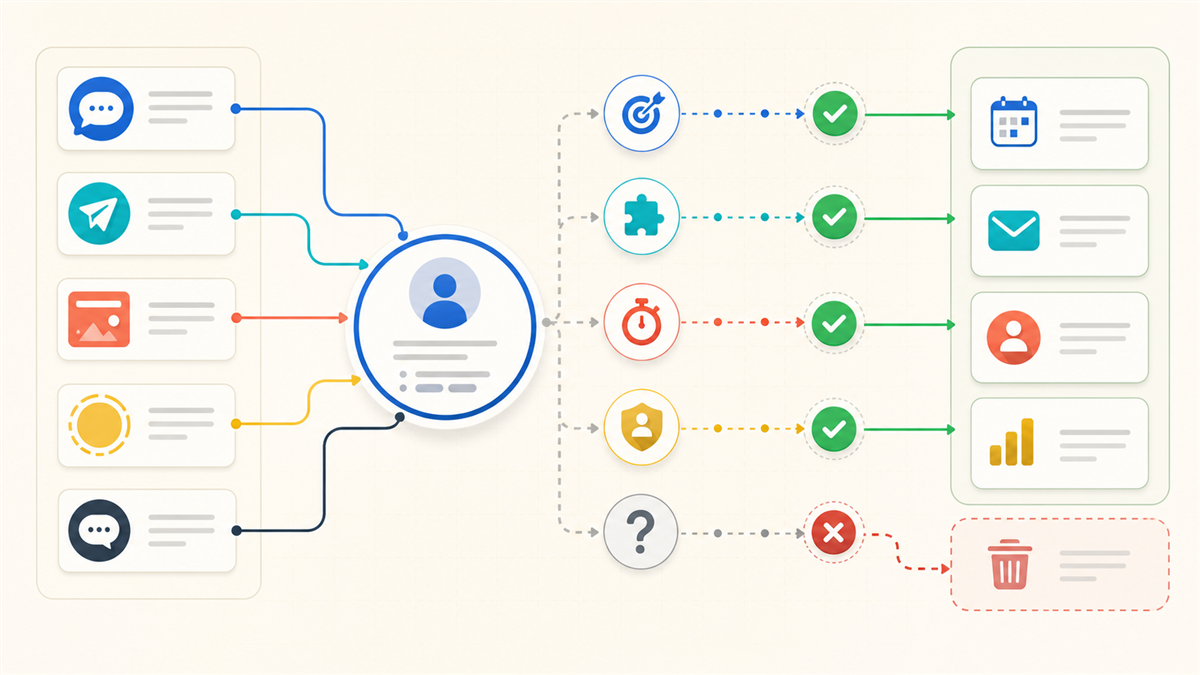
Give value before asking for contact details whenever possible. Answer the service-area question, show the relevant option, or provide the requested resource first. Then ask for an email address or phone number only when it supports a next step the person has chosen.
Design the First Useful Answer
The first useful answer should be specific enough to move the conversation forward. “Thanks for your message” is an acknowledgement, not an answer. A better response confirms the request, provides one relevant fact, and offers a clear choice.
For example: “Yes, the consultation covers setup and ongoing optimization. The next available times are Tuesday afternoon and Thursday morning. Which works better?” That reply answers the scope question and creates a simple route. It does not bury the person in a menu of unrelated services.
Build separate answers for availability, fit, price range, service area, scheduling, order status, and human help. Keep the source of each fact current. When the answer depends on an account, exception, refund, or custom quote, route it instead of inventing a result.
Make Human Handoff a Designed Part of the Stack
Handoff should not be the place where automation fails silently. Define the topics, confidence threshold, customer request, and operating hours that trigger a person. Decide whether the conversation is assigned to a sales role, service role, specialist, or general inbox.
The person receiving it needs context: the original signal, the answers already given, the qualification fields, the current intent, and the reason for escalation. A handoff that forces the customer to repeat everything creates more work than it saves.
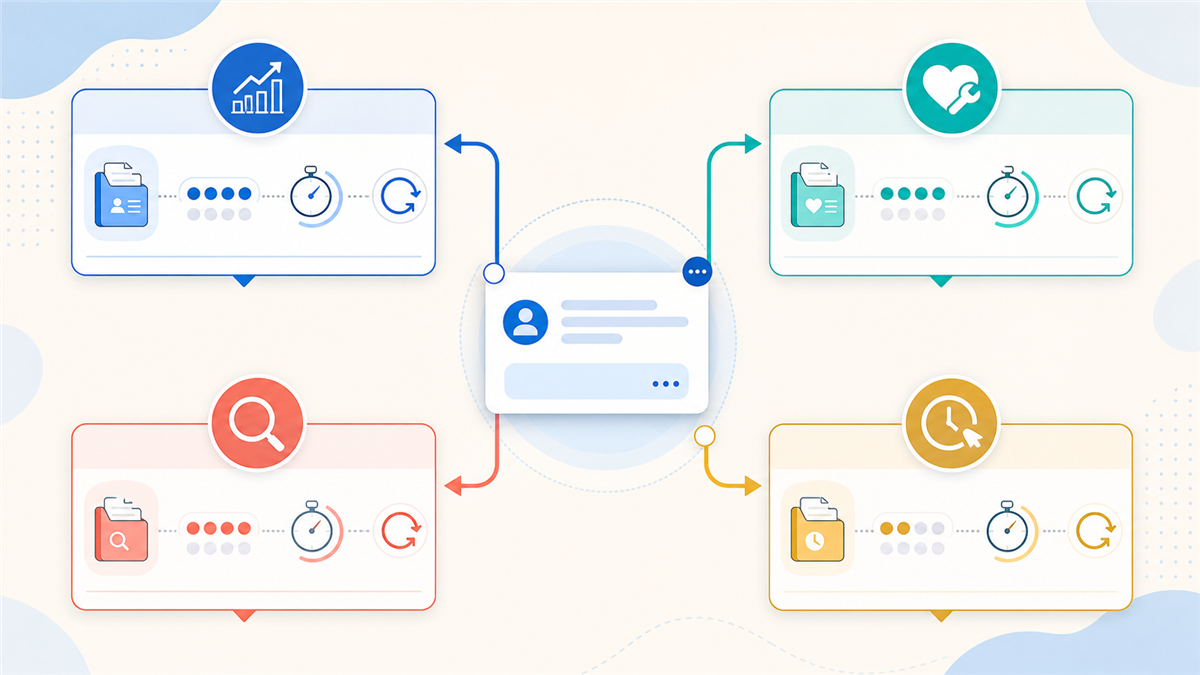
Plan for unavailable staff. Use a clear expectation, preserve the assigned record, and give the customer a next action that does not depend on an immediate response. Do not let the automation continue making promises while the required reviewer is offline.
For a brokerage listing inquiry, keep the property link, requested time and preferred reply channel in the handoff; leave availability and the next owner unconfirmed until a person reviews them. The brokerage inquiry handoff example separates the request from a confirmed next step. Disclosure: The Cafe Techno and Messenger Bot share ownership.
Choose Integrations After the Conversation Works
It is tempting to connect a customer system, calendar, email tool, spreadsheet, and reporting platform before the first flow is tested. Start with the conversation. Once the trigger, answers, branches, and handoff work, connect only the systems needed to complete or measure the next action.
A booking integration should create the correct appointment and prevent duplicates. A customer-record integration should update the intended fields without overwriting better data. A notification should reach the responsible person once, not create several alerts for the same lead.
Document ownership for every connection. Record who can change credentials, what data moves, how failures appear, and how the connection can be disabled. The stack should have an exit path as well as an activation path.
Use AI for Classification and Drafting, Not Unbounded Authority
AI can help classify open-ended intent, summarize a long message, retrieve an approved answer, or draft a response for review. It should not decide every exception or make claims that are absent from the business’s current information.
Create a knowledge set with approved hours, service areas, product information, policies, preparation steps, and escalation contacts. Define sensitive topics that always go to a person. Give the customer a clear way to request human help.
Test misspellings, short replies, mixed intent, frustration, and questions outside the knowledge set. Measure how often the system routes correctly and how often a person changes the proposed answer. Review results by intent rather than treating all messages as one accuracy score.
Measure Qualified Next Actions Instead of Message Volume
A long automated conversation is not automatically a good one. The useful metrics connect the signal to an outcome:
- Time from first message to first useful answer.
- Percentage of conversations that reach the promised resource or decision.
- Qualified booking, quote, demo, or purchase actions.
- Handoff rate and time to human response.
- Unanswered intents and repeated fallback messages.
- Duplicate records, failed integrations, and opt-out completion.
Review the weak points weekly during a new launch. If people drop after a question, decide whether the question is necessary. If handoffs wait too long, adjust staffing or narrow the promise. If a trigger attracts the wrong intent, change the public call to action before adding more branches.
A Practical Stack Review Checklist
| Layer | Required proof | Failure to test |
|---|---|---|
| Signal | Exact supported trigger and preserved context | Wrong or duplicate trigger |
| Qualification | Every question changes the route | Missing or declined answer |
| Answer | Current approved information | Unknown or conflicting request |
| Handoff | Owner, context, expectation, and fallback | Unavailable staff member |
| Integration | Field map, monitoring, and disable path | Duplicate or failed update |
| Measurement | Qualified next action and review cadence | Traffic without completion |
For another practical technology evaluation, see The Cafe Techno’s guide to testing a chatbot before putting it on a website. Teams preparing a broader system transition can also use the technology continuity records checklist to document ownership and dependencies.
Frequently Asked Questions
How many questions should a social lead flow ask?
Use the fewest questions needed to change the route. A simple flow may need one or two; a custom service may need more. Remove any question whose answers all lead to the same next step.
When should a person take over?
Use human handoff for low-confidence answers, sensitive topics, complaints, account-specific issues, custom quotes, refunds, and any direct request for a person.
Should every lead be copied into a customer system?
No. Define the qualification or consent event that makes a record useful. Copying every low-intent message can create duplicates and make the customer system harder to trust.
What is the best first metric?
Track the percentage of conversations that receive the promised useful answer and reach the intended next action. That is more informative than total messages sent.

0 Comments